
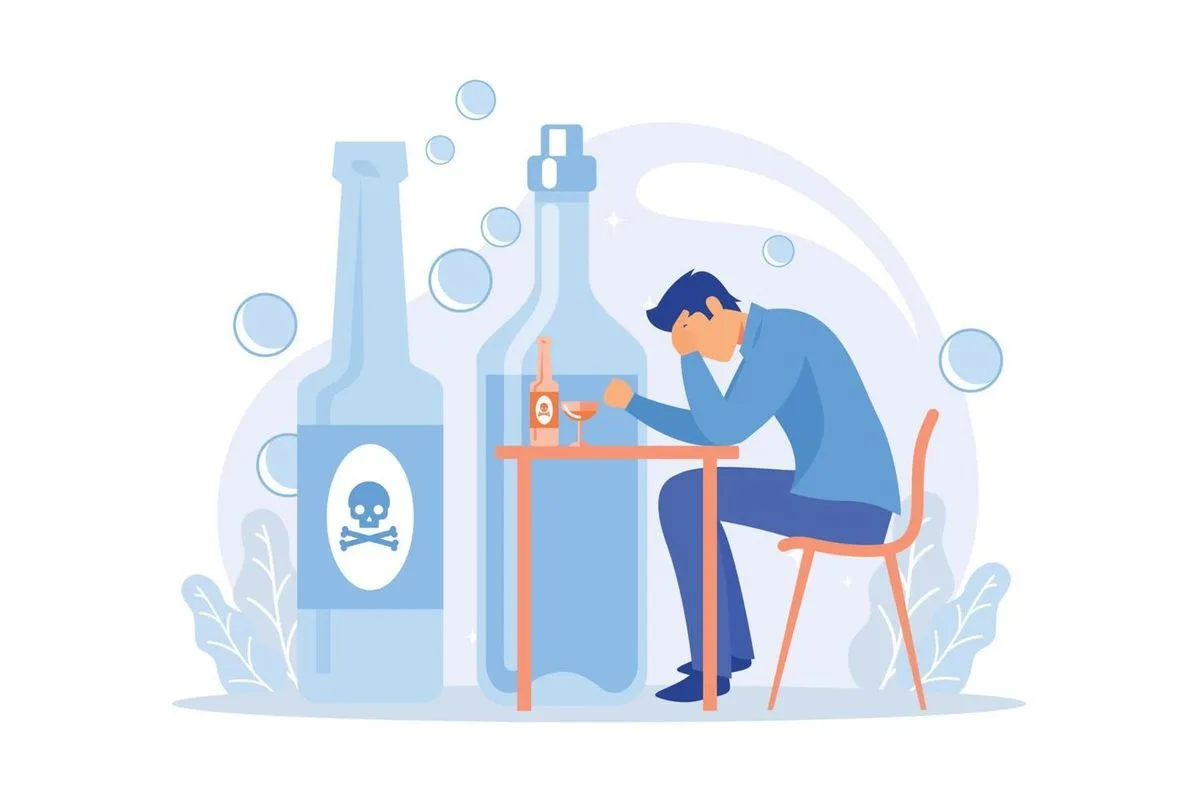
Many people who drink heavily over the long term have had this experience: they want to quit drinking, but they don't dare simply stop. Once they stop, their bodies experience all kinds of uncomfortable reactions, sometimes even more painful than when they were drinking. This is not weak willpower, but rather withdrawal reactions triggered by alcohol dependence—the stress response that occurs when the body, after prolonged alcohol stimulation, suddenly loses its "support." Understanding where these reactions come from and how they develop is the first step toward quitting alcohol safely.
How do withdrawal reactions occur?
Alcohol is a central nervous system depressant. Long-term heavy drinking causes the brain to gradually adapt to this "braked" state. To maintain balance, the nervous system compensates by becoming more excitable. When alcohol is suddenly removed, the inhibitory effect disappears, and the nervous system enters a state of over-excitation, triggering a series of withdrawal symptoms. This process is not "detoxification," but rather the result of disrupted neural adaptation mechanisms.
The severity of withdrawal reactions is related to the number of years of drinking, daily alcohol intake, baseline physical condition, and past withdrawal experiences. The longer the drinking history and the greater the amount consumed, the deeper the nervous system's compensation, and the more intense the reaction may be when alcohol is suddenly stopped. This is why quitting alcohol cannot simply be equated with "just toughing it out."
What discomforts may the body experience when alcohol is suddenly stopped?
1. Somatic symptoms are the most common
In the early stage of withdrawal, many people experience hand tremors, palpitations, sweating, nausea and vomiting, loss of appetite, and generalized fatigue. These symptoms typically begin 6 to 12 hours after stopping drinking and peak at 24 to 48 hours. Some people also experience blood pressure fluctuations and rapid heartbeat, feeling restless and unable to sit still.
If the level of dependence is severe, symptoms may escalate further, including limb convulsions, confusion, and unsteady gait, and may even progress to delirium tremens, manifested as disturbances of consciousness, hallucinations, and severe autonomic nervous system dysfunction—a condition requiring urgent medical intervention.
2. Emotional and mental changes
After suddenly stopping drinking, mood swings are often very pronounced. People become anxious, irritable, and easily angered, have difficulty concentrating, and lose interest in daily activities. Some may experience depressed mood, fatigue after interrupted sleep, and a strong urge to drink. These psychological discomforts are one of the important causes of relapse drinking.
In rare cases, transient hallucinations or delusions may occur during withdrawal, such as seeing things that are not there, hearing sounds that do not exist, or developing feelings of persecution. Although these symptoms are usually temporary, they significantly increase suffering and the risk of accidents.
3. Sleep rhythm disruption
Long-term drinking disrupts sleep architecture, leading people to mistakenly believe that alcohol helps with sleep. In reality, alcohol only shortens the time to fall asleep but disrupts the proportion of deep sleep and REM sleep. Once drinking stops, the nervous system loses alcohol's sedative effect, resulting in severe insomnia, early awakening, shallow sleep, and frequent nighttime awakenings, while daytime brings drowsiness and lethargy, creating a vicious cycle. Sleep problems may persist for weeks or even longer and require systematic intervention to gradually recover.
4. Adaptive fluctuations in organ function
The liver, gastrointestinal tract, and cardiovascular system also undergo adaptive changes in the early stage of alcohol cessation. For example, abdominal bloating, indigestion, decreased appetite, chest tightness, and dizziness may occur. These do not necessarily indicate new organ damage; rather, they reflect the body readjusting its metabolism and blood flow distribution. However, this adjustment process is not always smooth, especially for those with pre-existing underlying diseases, and should be carried out under medical supervision.
Why can't you just tough it out at home?
Many people believe that quitting alcohol is simply a matter of relying on willpower to get through a few days. For those with mild dependence, withdrawal reactions may indeed be relatively mild, but for those with moderate to severe alcohol dependence, the risks of blindly toughing it out cannot be ignored. Suddenly stopping drinking may trigger serious complications such as seizures, cardiac arrhythmias, high fever, and disturbances of consciousness, which not only increase suffering but may also be life-threatening.
The intensity and course of withdrawal reactions vary from person to person and are difficult to predict accurately in advance. Some people may have mild withdrawal reactions the first few times, but the next time may produce severe symptoms. Therefore, the core principle of safe alcohol cessation is to do it under professional medical assessment and monitoring, rather than stopping abruptly at home alone. Doctors can develop a gradual tapering or medication-assisted plan based on individual circumstances to smoothly control withdrawal symptoms and reduce risk.
The core approach to scientific alcohol cessation
Scientific alcohol cessation is not simply "stopping drinking," but rather a staged, multidimensional intervention process. Taking the Zhengzhou North Hospital Alcohol Cessation Center (Zhengzhou North Alcohol Cessation Hospital) as an example, as a member unit of the Zhengzhou People's Hospital Medical Consortium, the hospital has established an integrated Chinese-Western medicine withdrawal and rehabilitation system for alcohol dependence, helping patients smoothly navigate the withdrawal period from four levels:
- Physiological detoxification: Using professional medications to smoothly control withdrawal symptoms, prevent dangerous situations such as convulsions and delirium, and allow the body to transition safely.
- Traditional Chinese medicine regulation: Using Chinese herbal medicine to soothe the liver and awaken the brain, repair organ damage caused by long-term drinking, improve constitution, and alleviate physical discomfort.
- Psychological intervention: Providing psychological counseling for psychological dependence, helping patients understand the triggers behind drinking behavior, and reducing the urge to relapse from the root.
- Relapse prevention and consolidation: Under full medical supervision, combined with humane management, protecting privacy, without coercion or corporal punishment, gradually establishing a stable alcohol-free state.
The core of this comprehensive model lies in not treating alcohol cessation as a short-term task, but as a recovery process requiring ongoing support. For those who have drunk heavily for a long time, failed multiple attempts to quit, or experienced significant discomfort after stopping, choosing a professional treatment pathway can reduce unnecessary suffering and risk.
What situations require seeking professional help as soon as possible?
If the following situations occur, it is recommended to seek evaluation at a professional institution as early as possible: long-term drinking with inability to control oneself; hand tremors, palpitations, insomnia, or other symptoms after stopping drinking; a history of seizures or confusion during past withdrawal periods; concurrent underlying conditions such as liver disease or cardiovascular disease; multiple attempts to quit but relapse within a short period. These situations indicate a higher risk of withdrawal and require safe alcohol cessation under medical supervision.
Quitting alcohol is not about toughing it out, but rather a medical act supported by scientific methods. Understanding the mechanisms of withdrawal reactions, facing the body's true responses, and choosing an alcohol cessation path that suits you are the real ways to break free from the cycle of alcohol dependence. If you or a family member are facing this problem, you can learn more about the scientific knowledge of alcohol dependence to provide a basis for your next decision.